Hyperbaric Oxygen Therapy shows potential with Irritable Bowel Disease

Lisa St. John, M.S.
Lisa is our Clinic Director and Founder. She earned her Master's degree from Harvard University, completed a Fellowship at Stanford University, and has spent the last 30 years working in the healthcare field.
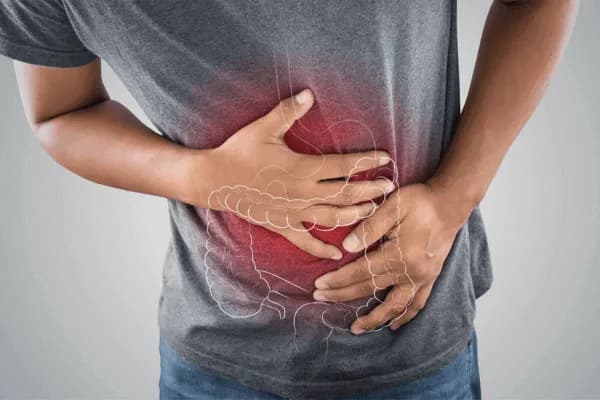
Living With IBD
If you or someone you love has Crohn's disease or ulcerative colitis, you already know how disruptive a flare can be — abdominal pain, fever, weight loss, and diarrhea that can derail work, family life, and basic daily functioning. IBD often doesn't respond fully to standard treatment. One 2018 study found that nearly 25% of patients hospitalized for a severe ulcerative colitis flare require surgery, and of those, 25% experience post-operative complications. For patients facing this reality, additional treatment options matter.
What the Research Shows: Ulcerative Colitis
The strongest evidence comes from a 2018 multi-center, double-blind, randomized, sham-controlled trial by Dulai et al., conducted at UC San Diego, Mayo Clinic, Dartmouth-Hitchcock Medical Center, and the University of Pittsburgh Medical Center. Eighteen patients hospitalized for moderate-to-severe ulcerative colitis flares were treated with either steroids plus HBOT (10 patients) or steroids plus a sham (placebo) HBOT treatment (8 patients).
After 10 days of daily treatment:
Remission: 50% of the HBOT group achieved clinical remission, compared to 0% of the sham group (p = 0.04)
Avoided escalation to second-line therapy: Only 10% of the HBOT group needed to progress to stronger rescue treatment, compared to 63% of the sham group
Avoided colectomy (colon removal surgery): 0% of the HBOT group required colectomy during hospitalization, compared to 38% of the sham group
Some patients responded to treatment in as early as 3 days
This was a small trial, so the results should be read as promising early evidence rather than definitive proof — but the size of the difference between groups, especially around avoiding surgery, is notable enough that researchers have called for larger confirmatory trials, some of which are now underway.
What the Research Shows: Crohn's Disease
Two literature reviews have looked at HBOT's effect on IBD more broadly:
A 2012 review by Rossignol identified 19 relevant studies. Across 13 studies on Crohn's disease, 78% of patients (31 of 40) showed improvement. Across 6 studies on ulcerative colitis, 100% of patients (39 of 39) showed improvement.
A 2014 review by Dulai et al. found that among 40 Crohn's disease patients with fistulizing or perianal disease across multiple studies, 43% were completely healed and 41% showed partial healing — an 88% overall positive response rate. All 39 ulcerative colitis patients reviewed showed improvement.
In both reviews, the patients studied had severe IBD that hadn't responded to standard medical treatment — meaning this research is most relevant to patients who've already tried conventional options without full success.
How HBOT May Help
Researchers believe HBOT works on IBD through several mechanisms at once: increasing oxygen delivery to inflamed, oxygen-starved tissue in the digestive tract, reducing inflammatory gene activity, supporting the rebuilding of small blood vessels, and providing antibacterial effects. Because IBD involves both chronic inflammation and tissue hypoxia (low oxygen), addressing both at once may explain why the results have been encouraging across multiple studies.
Is HBOT Right for You?
HBOT is generally considered a safe, adjunctive treatment — meaning it's used alongside standard IBD care (like steroids), not as a replacement for it. Given how disruptive and difficult-to-treat severe IBD flares can be, and the strength of the early evidence — particularly around avoiding colectomy — many gastroenterologists consider HBOT worth discussing for patients hospitalized with a severe flare, or those who haven't fully responded to standard treatment.
Safety and Expert Care
At Bay Area Hyperbarics, treatment decisions are made under expert medical guidance, coordinated with your gastroenterologist, and delivered with patient safety as the top priority.
Consult a healthcare provider before starting any new treatment. This article is for educational purposes and does not replace medical advice from your care team.
Frequently Asked Questions
Is HBOT the same treatment for IBD and IBS? No. This research applies to IBD (Crohn's disease and ulcerative colitis), which involves chronic digestive tract inflammation. IBS (irritable bowel syndrome) is a different, non-inflammatory condition, and this evidence doesn't apply to it.
Can HBOT help me avoid colon surgery for ulcerative colitis? In the 2018 randomized trial, no patients in the HBOT group required colectomy during hospitalization, compared to 38% in the sham group. This is promising but based on a small study — talk to your gastroenterologist about whether it's relevant to your situation.
Is HBOT covered by insurance for IBD? IBD is not currently an FDA-approved HBOT indication, so coverage varies and is often not included by default. Our team can help you understand costs before starting treatment.
If you or a loved one is living with Crohn's disease or ulcerative colitis, especially during a severe flare, reach out to our team to learn whether hyperbaric oxygen therapy could be part of your care plan.
You or a loved-one have IBD? Talk to our experts today.
"Can hyperbaric oxygen therapy help IBD? A 2018 randomized trial found HBOT reduced colectomy rates in severe ulcerative colitis flares. See the research."ave a conversation with our experts, to see if HBOT might be right for you or your loved-one, or just to schedule an appointment. We care deeply about helping.
